
There’s a moment, right before you go into cold water, where every sensible part of your brain tells you to turn back.
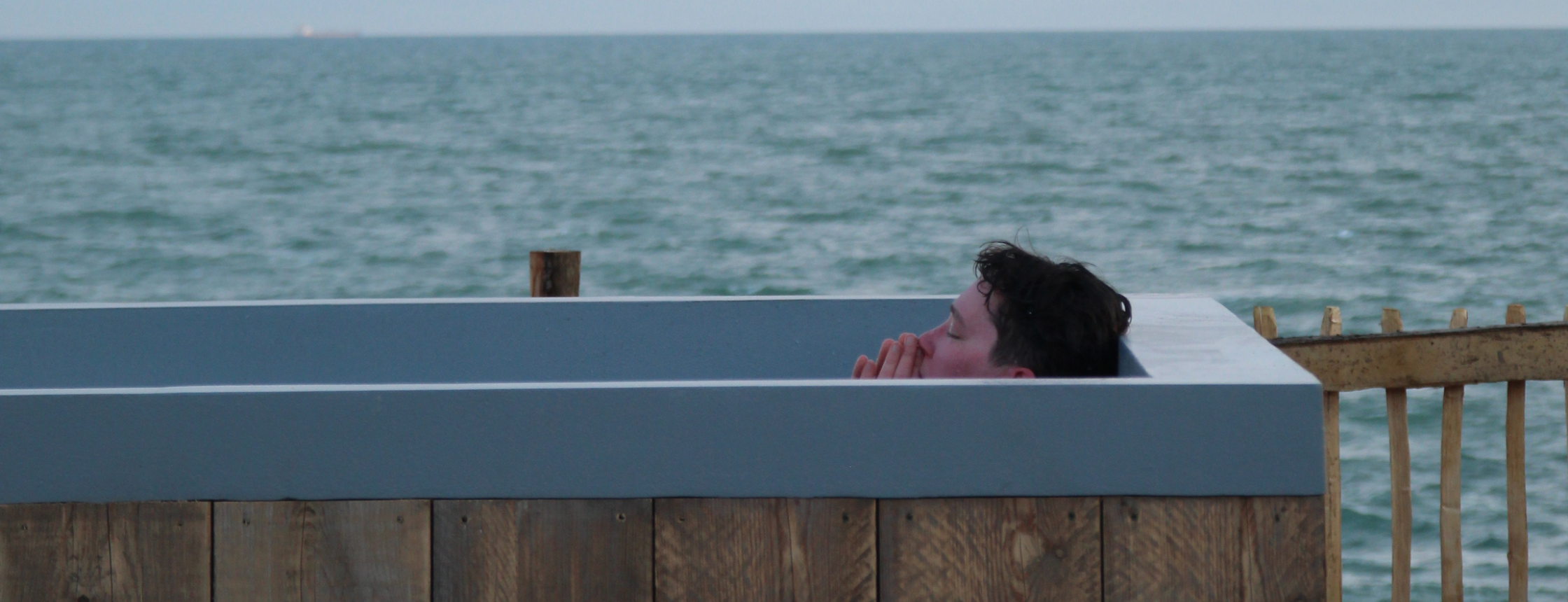
The barrel is full. It’s probably 10 degrees. And yet, the person next to you has already gone under and is grinning like they’ve just done something brilliant.
That moment is the whole point. And it’s the thing that nobody who practises cold water therapy ever quite manages to explain in advance.
Cold water therapy has been part of everyday life across Scandinavia for generations. Not as a wellness trend, not as something to post about, just as a quiet, consistent ritual that people swear by. The Norwegians have a phrase for the philosophy behind it: friluftsliv, open-air living, the idea that being outside in all weathers is good for you, body and mind. Cold water fits naturally into that way of thinking.
But you don’t need to live beside a Norwegian fjord to feel the benefits. The Kent coast does just fine.
What actually happens to your body during cold water immersion
The initial shock is real. Your body doesn’t pretend otherwise. Your heart rate climbs, your breathing quickens, and your nervous system fires up fast.
That’s norepinephrine being released into your bloodstream. It’s the same chemical that sharpens focus, lifts mood, and helps regulate stress. Research suggests that cold water immersion can increase norepinephrine levels by up to 300%, which goes some way to explaining why people consistently describe feeling clearer, calmer, and more alert after a dip.
Regular cold water therapy has also been linked to reduced inflammation markers and improved circulation. As your blood vessels constrict and then dilate in response to the temperature change, your cardiovascular system gets a thorough workout. Over time, that repeated stimulus builds a kind of physical resilience. The Finns have a word for this quality: sisu. Roughly translated, it’s grit with grace. The ability to keep going when things get uncomfortable.
Cold water teaches you that.

The mental health benefits of cold water swimming
Most people come for the physical benefits and stay for how it makes them feel mentally.
There’s something about willingly stepping into discomfort, and coming through the other side, that shifts something. Stress feels more manageable. Small anxieties quieten down. Regular cold water swimmers often describe it as the most present they feel all week, because when you’re in cold water, there’s genuinely nothing else to think about.
Research backs this up. A 2023 study from the University of Southern Denmark found that regular cold water swimming is safe for people with depression and may improve both sleep and overall wellbeing. Separate research from the University of Portsmouth found that 81% of participants with depression felt recovered after completing an outdoor swimming course, with 62% showing reliable improvement to their mental wellbeing. These aren’t small numbers.
The breathwork required to stay calm in cold water borrows from what we know about the vagus nerve and the parasympathetic nervous system. Slow, controlled breathing during cold water immersion teaches your body to regulate itself under pressure. That’s a skill that carries over into everyday life in ways that are hard to overstate.

Cold water therapy and contrast therapy: even better together
If you’ve ever stepped from a hot sauna into a cold plunge, you’ll already have a sense of what contrast therapy feels like. Alternating between heat and cold, a practice central to Scandinavian bathing culture, is thought to amplify the benefits of both.
The rapid shift in temperature drives blood through your cardiovascular system with real force, supporting circulation and recovery. Many athletes use contrast therapy regularly for exactly this reason. But you don’t need to be training for anything. The feeling afterwards, that particular combination of calm and wide awake, is reason enough.
At Sea Scrub Sauna, our cold plunge whisky barrels sit alongside the wood-fired saunas at all sites, so the full contrast therapy ritual is always available if you want it.

What actually puts most people off cold water swimming
It’s not the cold itself. It’s the not knowing what to expect.
Will I panic? Will I be able to breathe? What if I can’t handle it?
These are completely normal questions, and the honest answer is that the first time is the hardest, the second time is easier, and by the third or fourth time you start to understand what your body is capable of. Cold water swimming for beginners is genuinely manageable with the right guidance. The mistake most people make is going in without knowing the basics.
Getting the breathing right before you enter. Knowing how long to stay in. Understanding what your body is telling you and when to get out. These things make a significant difference, and they’re not complicated once someone shows you.
How to start cold water swimming in Whitstable
If you’re curious but not quite sure where to begin, Torsie runs our Couch to Cold Water course from Whitstable Harbour. Torsie is a cold water swimming champion who has spent years helping people take that first step in a way that feels supported rather than scary.
The course is built around gradual progression, proper breathwork, and building real confidence in the water. It’s not about being tough or enduring anything. It’s about learning to work with the cold rather than against it.
Whitstable is one of the finest places on the Kent coast to start. The harbour provides a sheltered entry point, the community around it is genuinely warm, and on a clear morning the light on the water is something else entirely.
Chances are, by the end of the course, you’ll be the one standing at the water’s edge grinning at a complete stranger.
If that sounds like something you’re ready for, you can find out more and book your place here.

